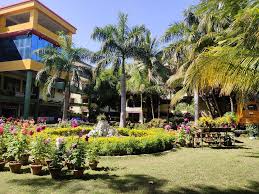
A Complete Overview of Gayatri Paramedical & Management Institute, Delhi
Gayatri Paramedical & Management Institute, most people just call it GPMI Delhi, is a private institute that’s grown quickly in South Delhi for paramedical and allied health courses. It’s run by the GPMI Foundation, which is registered with the Govt. of NCT of Delhi. The campus sits in Khanpur Extension, Delhi Road. It started recently, around 2023-24, so it’s new compared to old colleges. But being in Delhi is a big plus. You’re surrounded by top hospitals like AIIMS, Safdarjung, Max, and Fortis. GPMI uses that.
Fees are a key reason GPMI has become a popular option among students looking for affordable healthcare courses. Private paramedical colleges in Delhi can easily charge 3–4 lakh. Here, most B.Voc courses come to about ₹1.2 lakh to ₹1.5 lakh for the full 3 years. Diplomas like DMLT are even cheaper, often under ₹1 lakh total. That’s why you’ll see a lot of students from middle-class families here. You can get into healthcare without taking a huge loan. Placements aren’t like engineering colleges where companies visit campus with offer letters. It’s paramedical. What GPMI does is train you well and then use its hospital tie-ups to help you get jobs. Students usually get placed as lab technicians, OT assistants, dialysis techs, or EMTs in Delhi-NCR hospitals, labs, and clinics. The batches are small, so teachers actually know your name and where you’re weak. That personal attention helps.
It’s not in the NIRF rankings yet. It’s too new. But ask around in Khanpur and Devli, and you’ll hear students say they liked the practical classes and got a job right after DMLT or B.Voc. If you want a quick, affordable way into the healthcare field without NEET, this is one option. The institute runs diplomas, B.Voc degrees, and short certificates. You don’t need NEET to get into any course. Admission is based on your 12th marks. PCB is preferred, but some certificate courses take students from any stream. You apply, they check your marks, call you for counselling, and if seats are there, you pay and join. Simple.
Gayatri Paramedical & Management Institute: Important Facts
GPMI Delhi is a private institute started around 2023-24 by GPMI Foundation. It’s in Khanpur Extension, Devli Road, South Delhi. The focus is 100% on paramedical and allied health work. It’s registered with the Govt. of NCT Delhi and runs courses that match what hospitals actually need. B.Voc fees are roughly ₹40,000–50,000 a year, so ₹1.2–1.5 lakh total. Admission is through 12th merit, no entrance test. The big draw is low fees, hospital training, and job help in Delhi-NCR.
| Detail | Information |
| Name | Gayatri Paramedical & Management Institute |
| Started | Around 2023–24 |
| Location | Khanpur Extension, Devli Road, Delhi |
| Type | Private Institute |
| Registered With | Government of NCT Delhi |
| Main Area | Paramedical & Allied Health Sciences |
| Nearest Metro | Saket Metro Station, followed by an auto or bus to Devli Road |
| Campus Type | Urban |
| Mode of Study | Full-Time |
| Focus Area | Skill-Based Healthcare Education |
| Region | Delhi-NCR |
Courses Offered at Gayatri Paramedical & Management Institute, Delhi
GPMI keeps its courses practical. You choose a diploma, B.Voc, or certificate, and from month one you’re in labs and hospitals. The idea is to make you job-ready fast.
Diploma Courses run 1 to 2 years. The popular ones are DMLT, Diploma in Medical Lab Technology, and Nursing Assistant. You learn to handle blood samples, run tests, manage patient care basics, and work in wards. Good if you want to start working in 12–18 months.
B.Voc Degrees are 3 years and UGC-approved. These are proper degrees, not just diplomas. GPMI offers B.Voc in MLT, OT Technology, Dialysis Technology, MRIT (Medical Radiology & Imaging Technology), and Optometry Technology. You get theory in class and hospital postings every semester. After 3 years, you can work as a technician or go for an MSc/MHA later.
Certificate Courses are short, 6 months to 1 year. Emergency Medical Technician EMT) is the main one. You learn first aid, ambulance care, and emergency response. Some other small courses may be offered depending on hospital demand.
| Level | Program | Duration | Entry Criteria |
| Diploma | Diploma in Medical Laboratory Technology (DMLT), Nursing Assistant, Operation Theatre Technology (OTT), and similar programs | 1–2 Years | 10+2 Pass (Science stream preferred) |
| Undergraduate | B.Voc in Medical Laboratory Technology (MLT), Operation Theatre Technology (OTT), Dialysis Technology, Medical Radiology and Imaging Technology (MRIT), Optometry Technology | 3 Years | 10+2 with PCB/PCM and at least 45% marks |
| Certificate | Emergency Medical Technician (EMT), Lab Assistant, and other skill-based healthcare programs | 6 Months–1 Year | 10+2 Pass from any stream |
Fees, Hostel Charges, and Overall Cost of Studying at GPMI Delhi
Let’s talk about money straight. Delhi is expensive, but GPMI keeps its course fees lower than those of most private colleges. For B.Voc courses, tuition is around ₹40,000 to ₹50,000 per year. So the full 3-year degree costs you ₹1.2 lakh to ₹1.5 lakh total. Diploma courses are cheaper. DMLT or Nursing Assistant usually finish within ₹80,000 to ₹1 lakh total. Certificate courses are the lowest, often ₹25,000 to ₹40,000 total.
The hostel isn’t on campus, but the institute can help you find PGs or partner hostels nearby in Khanpur and Saket. A shared room with food costs about ₹60,000 to ₹90,000 per year. Many local students stay home and save that.
At admission, you pay a one-time fee for uniform, lab kit, ID card, and security deposit. That’s roughly ₹10,000 to ₹20,000. No big hidden charges. Exam fees go to the university or board and are about ₹2,000–3,000 per semester.
So if you do B.Voc MLT and stay in a hostel, your 3-year spend is around ₹3 lakh to ₹4.2 lakh, all-inclusive. If you’re a day scholar, it’s closer to ₹1.5–1.8 lakh total. DMLT students often finish under ₹2 lakh, even with hostel accommodation. Compare that to private nursing or MBBS, and you’ll see why students pick this.
Scholarships help. If you’re SC, ST, OBC, or EWS, you can apply on the Delhi e-District portal for fee reimbursement. The institute gives you bonafide letters for bank loans too.
| Fee Head | Approximate Amount |
| B.Voc Tuition Fee | ₹40,000–₹50,000 per year (₹1.2–1.5 Lakhs total) |
| Diploma Tuition Fee | ₹80,000–₹1 Lakh for the entire course |
| Hostel and Mess Charges | ₹60,000–₹90,000 per year (nearby PG and hostel options available) |
| One-Time Charges | ₹10,000–₹20,000 (includes security deposit, uniform, and training kit) |
| Examination Fee | ₹2,000–₹3,500 per semester |
Most students finish their full course within ₹2–5 lakh, depending on the program and living costs. No stipend during the course because these are not medical internships, but you start earning right after.
Student Financial Support at Gayatri Paramedical & Management Institute
GPMI is private, so there’s no free seat like a government college. But you still have options. First, Delhi Govt scholarships. If you’re SC, ST, OBC, EWS, or a minority and your family income is under the limit, you can get your tuition fee paid back through the Delhi e-District scheme. You apply online after admission.
Second, central schemes. The National Scholarship Portal has merit-cum-means scholarships. If you scored well in 12th and your income is low, you can get help.
Third, education loans. Because the fee is low, banks clear loans easily. SBI, PNB, and HDFC all offer loans for paramedical and B.Voc courses. GPMI gives you the admission letter, fee structure, and bonafide certificate. Interest rates are normal, and you start paying after the course.
The institute itself doesn’t give big in-house scholarships yet, but toppers in 12th sometimes get a small fee discount. There’s no monthly stipend during study. These aren’t MBBS internships. But the course is short. You finish DMLT in 1 year and start a job paying ₹15,000–22,000. B.Voc grads start at ₹18,000–28,000 in Delhi hospitals. So you recover the cost fast.
| Support Type | What You Get |
| Delhi Government Scholarship | Tuition fee reimbursement and financial assistance for eligible SC, ST, OBC, and EWS students |
| National Scholarship Portal (NSP) Schemes | Merit-based and income-based scholarships offered by the Central Government for eligible candidates |
| Education Loan Facility | Bank loans covering part or full course fees, subject to bank policies and submission of institute documents |
| Institute Assistance | Support with bonafide certificates, document verification, and guidance for scholarship and loan applications |
Admission Process at GPMI Delhi: Eligibility and Application Steps
This is the easy part. No NEET, no entrance exam; the admission process is relatively straightforward. GPMI takes students on 12th marks. Here’s how it works.
Step 1: Check If You’re Eligible
You should be 17 years old and have passed 10+2. For B.Voc and DMLT, PCB is preferred. If you have a PCM or even a Commerce background, you can still apply for some certificate courses. The minimum marks required are usually 45% for General and 40% for reserved. If you have 50% or more, your chances are good.
Step 2:Register for counseling
Go to www.gpmi.net.in or walk into the Khanpur campus. Fill the form. Online is faster. Upload or attach your 10th and 12th marksheets, Aadhaar, photos, and caste certificate, if applicable.
Step 3: Merit List or Direct Counselling
GPMI checks all forms and prepares a merit list based on 12th % marks. Popular courses like B.Voc MLT and DMLT fill first. If you’re on the list, they call you. Sometimes, if seats are there, they do direct admission on the spot.
Step 4: Confirm Your Seat
You visit the campus, show originals, pay the first semester fee or a token amount, and take your admission letter. That’s it. No waiting for rounds like MBBS.
Seats are limited. B.Voc batches are 30–40 students. Diplomas are 40–50. Admissions for 2026-27 are already open, and early applicants get preference. If you wait till July-August, seats in MLT and OTT might be gone.
Eligibility Criteria and Minimum Marks Required for Admission
Since there’s no NEET, your 12th percentage is everything. GPMI isn’t super strict because it’s new and wants to fill seats, but the demand is growing.
For the General category, if you have 50%–60% in PCB, you’ll get B.Voc MLT or DMLT easily. OBC students with 47%–55% get in. SC/ST/EWS with 42%–50% also get seats. If you have 60%+, you’re first in line and might get a small merit concession.
These numbers move a bit each year. In 2024, the General cutoff for B.Voc was around 48%–55%. In 2025, it went to 50%–58% because more students applied. For 2026, expect 50%–60% for General. So don’t worry if you didn’t score 90%. But don’t apply with 35% either. Keep your marksheets ready and apply early.
| Category | 2024 Last Admitted % | 2025 Last Admitted % | Expected 2026 |
| General | 48–55% | 50–58% | 50–60% |
| OBC | 45–52% | 46–54% | 47–55% |
| SC/ST/EWS | 40–48% | 42–50% | 42–50% |
These are not official cutoffs. GPMI doesn’t release them like DU. This is based on what students got last year. Higher marks = faster admission.
Campus Life, Labs, and Hospital Training at GPMI
GPMI’s building in Khanpur is 4 floors. It’s not a huge campus like DU, but it has what you need. Classrooms have projectors and whiteboards. The real focus is labs. There’s a Medical Lab Technology lab with microscopes, centrifuges, and auto-analysers. The Radiology lab has X-ray view boxes and models. OT lab has a dummy OT table, lights, and instruments to practice. The Dialysis lab has a demo machine. Students receive practical exposure through laboratory sessions. The library is small but has all the standard books for MLT, OTT, Anatomy, Physiology, and Pathology. They also give you PDFs and notes. Wi-Fi is there for research.
Now the big thing: hospital training. GPMI has tie-ups with hospitals in South Delhi and NCR. From the 2nd semester, you go for postings. DMLT students spend days in pathology labs. B.Voc OTT students stand in real OTs and watch surgeries. Dialysis students sit with technicians during actual dialysis. You get patient contact before you graduate.
The hostel is not in the same building. GPMI ties up with private hostels nearby. Separate for boys and girls. You get a bed, cupboard, table, and mess food. It’s basic but safe. Most students from Delhi NCR travel daily. The canteen gives tea, snacks, and lunch. Transport isn’t provided, but Saket Metro is 15 mins away.
Career Support and Placement Assistance at GPMI Delhi
GPMI doesn’t promise “100% placement” because no paramedical college can. But they do support you. During the last semester, the placement cell calls hospitals and labs. Apollo Cradle, Max Lab, Dr Lal PathLabs, local nursing homes, and dialysis centres often hire. The starting salary for a DMLT is ₹15,000–20,000 in Delhi. B.Voc MLT or OTT grads earn ₹18,000–28,000. With 1–2 years’ experience, it goes to ₹30,000+.
You can also work in blood banks, IVF labs, eye hospitals, or go for government jobs like AIIMS technician posts when they open. Some students do MSc MLT or MHA later. The short course duration means you start earning by age 20 or 21, while your MBBS friends are still in 2nd year.
The institute gives you an experience letter from the hospital where you trained. That paper helps a lot in interviews. Faculty also refer good students directly. Students who actively participate in training and internships generally have better career opportunities.
Common Doubts About GPMI Delhi
1. Can I apply to GPMI Delhi without Science on the 12th?
For B.Voc MLT, OTT, Dialysis, MRIT, and Optometry, you need 10+2 with Science, PCB or PCM preferred. PCB gets first preference because the subjects match. If you’re from Commerce or Arts, you can’t take these. But certificate courses like EMT or Nursing Assistant are sometimes available in any stream. DMLT also prefers Science, but if seats are left, they may consider non-science with Biology in 10th. The best thing to do is call the admissions office with your marksheet. Age should be 17+. No NEET, no entrance. Just marks and documents. Students from any state can apply, not just Delhi.
2. What are the best courses at GPMI and how long are they?
The most in-demand courses are DMLT (1-2 years) and B.Voc in MLT, OTT, Dialysis Tech, and MRIT (3 years each). DMLT is fastest if you want a job in a year. You’ll work in labs performing blood and urine tests and handling samples. B.Voc MLT is a full degree that gives you deeper knowledge, so you get better pay and can pursue an MSc later. B.Voc OTT puts you in operation theatres helping surgeons. Dialysis Tech is growing because the number of kidney patients is increasing.
3. How much will I really spend in total at GPMI?
For B.Voc, the total tuition is ₹1.2–1.5 lakh. Add a hostel at ₹60,000–90,000 per year if you need it. So, 3 years in a hostel is about ₹3–4.2 lakh, all in. Without a hostel, it’s ₹1.5–1.8 lakh total. DMLT tuition is ₹80,000–1 lakh. With a 1-year hostel stay, you finish under ₹2 lakh. Certificate courses are ₹25,000–40,000 total. Add ₹10,000–20,000 one-time for uniform and kit. Exam fees are extra but small. Compare that to private nursing at ₹6–8 lakh or BPT at ₹4–6 lakh. Plus, you start earning in 1–3 years. Scholarships can cut this down more. Loans are easy because the amount is low. So, financially, it’s one of the lightest options for healthcare in Delhi.
4. Does GPMI really help with jobs after the course?
Yes, but understand how it works. This isn’t like IIT where Google comes to campus. In paramedical, you get a job through training and contacts. GPMI posts you in hospitals during the course. You work hard, the lab in-charge notices you, and often they hire you straight away. The placement cell also sends your CV to Max Lab, Dr Lal PathLabs, and small hospitals. Most students get jobs in 1–3 months after finishing. Starting pay in Delhi is ₹15,000–22,000 for diploma holders and ₹18,000–28,000 for B.Voc. If you’re willing to go to Gurgaon or Noida, pay is higher.
5. Is the GPMI campus safe and what’s student life like?
The campus is in a proper South Delhi area with shops and houses around. There’s security at the gate and CCTV. Khanpur is a busy area, so it’s safe during the day. At night, as in any part of Delhi, use normal caution. The girls’ hostel is separate with a female warden. The crowd is mostly from Delhi, UP, Haryana, and Bihar. Batches are small, 30–50 students, so you know everyone. Teachers are approachable, and many are working professionals from hospitals.
6. Are GPMI degrees and diplomas valid across India for jobs?
Yes. B.Voc degrees are UGC approved and run under the National Skills Qualifications Framework. That means they’re valid for jobs and higher studies anywhere in India. DMLT and other diplomas are under the State Paramedical Council or approved by relevant bodies. GPMI is registered with the Govt. of NCT Delhi, and the courses follow industry standards. Hospitals in Delhi, Mumbai, Bangalore, everywhere, hire based on skill and certificate validity.