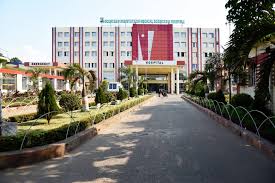
Introduction to the Institution Covering Its Establishment, Purpose, and Academic Overview
Gouri Devi Institute of Medical Sciences and Hospital is a private medical college located in Durgapur, West Bengal, along the Grand Trunk Road. It was established in 2016 and is affiliated with the West Bengal University of Health Sciences (WBUHS), Kolkata. The college is known for its modern campus and structured medical education system designed to train future doctors with strong clinical skills.
The institution is often mentioned among well-known private medical colleges in West Bengal for its academic environment and hospital-based training. Students get practical exposure through the attached hospital, which helps them understand real medical cases during their studies. The college also supports career growth through internship opportunities and hospital postings, where students can gain hands-on experience as junior doctors.
In terms of courses, the college offers MBBS at the undergraduate level and also provides MD and MS postgraduate programs in various medical specializations. Admission is based on national-level entrance exams, NEET-UG for MBBS and NEET-PG for postgraduate courses. The MBBS fee is approximately ₹5.5 lakh per year, while postgraduate course fees generally range between ₹11.5 lakh and ₹13.5 lakh per year, depending on the specialization.
Gouri Devi Institute of Medical Sciences and Hospital - Key Highlights
It is a private medical college affiliated with WBUHS and recognized by the NMC. Established to provide quality medical education, the institute offers MBBS training with an attached hospital, modern infrastructure, and strong clinical exposure for students pursuing medical careers.
Quick Facts at a Glance
| Particulars | Exact Details |
| College Name | Gouri Devi Institute of Medical Science and Hospital |
| Location | Muchipara, Durgapur, West Bengal |
| Established | 2008 |
| Affiliation | The West Bengal University of Health Sciences (WBUHS) |
| Recognition | National Medical Commission (NMC) |
| Type | Private Self-Financed Medical College |
| Hospital Capacity | 300-500 Beds |
| Courses Offered | MBBS, Nursing, Paramedical Programs |
| Entrance Exam | NEET-UG (MBBS Admission) |
| Admission Process | MCC (AIQ) & WBMCC Counselling |
| MBBS Duration | 4.5 Years + 1 Year Internship |
| Annual MBBS Intake | 150 Seats (Approx.) |
| Campus Type | Urban Medical Campus with Attached Teaching Hospital |
| Mode of Study | Full-time, Hospital-based Clinical Training |
| Internship | Mandatory Rotating Internship |
Structured Insight into Courses Offered and Student Intake Capacity per Academic Year
The main program everyone wants is the undergraduate medical degree. This course takes five and a half years to finish. That includes four and a half years of studying and one year of working in the hospital. The campus takes in exactly one hundred students for this program every year. The curriculum is divided into pre-clinical, para-clinical, and clinical phases.
The institution also runs a strong nursing school and offers allied health programs. These include degrees in general nursing and midwifery, along with specialized diplomas. This mix helps build a complete healthcare team. The nursing students also get to train in the same massive hospital complex.
| Course Name | Duration | Annual Intake | Basic Eligibility |
| MBBS | 4.5 Years + 1 Year Internship (5.5 Years Total) | 150 Seats | NEET-UG Qualified, 10+2 with Physics, Chemistry, Biology & English |
| B.Sc. Nursing | 4 Years | 50 Seats (Approx.) | 10+2 with PCB, Minimum 45% Marks (as per norms) |
| GNM (General Nursing & Midwifery) | 3 Years | 50 Seats (Approx.) | 10+2 in any stream, Minimum 40% Marks |
| Diploma in MLT | 2 Years | 30 Seats (Approx.) | 10+2 with Science (PCB/PCM) |
Complete Step-by-Step Admission Process and Eligibility Criteria for Course Enrollment
Getting a seat here is strictly based on merit. You cannot buy direct admission or skip the entrance process. First, you must appear for the national medical entrance test. This exam is the only gateway to any medical seat in the country. Once your results are out, you need to register for the state counseling process. The West Bengal Medical Counselling Committee (WBMCC) handles this entire procedure.
Here is the exact step-by-step process you need to follow to secure a seat:
Step 1: Appear for NEET-UG
You must register and sit for the National Eligibility cum Entrance Test conducted by the NTA. You need to score above the minimum qualifying percentile to be considered for counseling.
Step 2: Register for WBMCC State Counseling
After the NEET results are declared, visit the official West Bengal Medical Counselling Committee website. You must register, pay the counseling fee, and upload your required documents for verification.
Step 3: Choice Filling and Locking
During the choice filling round, you will see a list of all medical colleges in the state. You must add Gouri Devi Institute of Medical Science and Hospital to your preference list. Make sure to lock your choices before the deadline.
Step 4: Check Seat Allotment Result
The counseling authority will release the merit list and seat allotment results. If your NEET rank is high enough and the seat is available, you will be allotted a seat at this campus.
Step 5: Report to the Campus
If allotted a seat, you must physically report to the college within the given timeframe. You will need to show your original documents for verification and pay the admission fee to confirm your seat.
Eligibility Requirements
| Criteria | Mandatory Requirement |
| Age Limit | Minimum 17 years as of 31st December of the admission year |
| Qualifying Exam | 10+2 passed with Physics, Chemistry, Biology, and English |
| Minimum Marks | 50% for General, 40% for SC/ST/OBC, 45% for PwD (as per NMC norms) |
| Entrance Test | Must qualify NEET-UG with the required percentile |
| Domicile | West Bengal domicile is required for 85% of the state quota seats |
Understanding the Full Fee Structure and Cost of Education for Different Courses and Programs
Money is always a big factor when choosing a private medical school. The fees here are regulated by the state fee regulatory committee. This means the management cannot charge whatever they want. The total cost includes tuition, development fees, and hostel charges. Students coming through the state quota pay a different amount compared to management seats. It is always smart to keep some extra funds for books, uniforms, and personal needs.
| Fee Component | Approximate Amount (INR) | Payment Frequency |
| Tuition Fee | ₹10,00,000 – ₹11,00,000 | Per Year |
| Development Fee | ₹50,000 – ₹75,000 | Per Year |
| Hostel & Mess | ₹80,000 – ₹1,00,000 | Per Year |
| Caution Deposit | ₹10,000 | One-Time (Refundable) |
| Total Estimated Cost | ₹11,50,000 – ₹13,00,000 | Per Year |
Placement Opportunities and Future Career Options After Course Completion
Medical colleges do not have traditional campus placements like engineering schools. For MBBS students, the first professional step is a mandatory one-year internship at the attached hospital. After finishing this, graduates usually appear for postgraduate entrance exams or apply for Junior Resident roles in government and private hospitals. The situation is different for nursing and paramedical students.
| Course | First Step After College | Common Job Roles | Starting Salary (Monthly) |
| MBBS | 1-Year Compulsory Internship | Junior Resident, Medical Officer | ₹60,000 – ₹80,000 |
| B.Sc Nursing | Hospital Postings / Clinical Training | Staff Nurse, Healthcare Assistant | ₹20,000 – ₹30,000 |
| GNM | Ward Training / Clinical Posting | General Nurse, Community Health Worker | ₹15,000 – ₹22,000 |
| Diploma (MLT / Allied Health) | Lab / Diagnostic Training | Lab Technician, Radiology Assistant | ₹12,000 – ₹18,000 |
Comprehensive Details of Campus Infrastructure, Laboratories, Library, and Learning Facilities
Walking into the campus, you will notice a very focused academic environment. The main academic block has large, well-lit classrooms. Teachers use modern projectors and digital boards for daily lectures. For hands-on learning, the science labs are fully equipped. You will find detailed anatomy halls with proper cadaver facilities, modern physiology labs, and biochemistry workstations. The infrastructure is designed to handle a large batch of students comfortably without feeling overcrowded.
Key Campus Facilities
| Facility | Details Provided |
| Classrooms | Spacious, well-ventilated lecture halls equipped with digital projectors and smart teaching aids |
| Laboratories | Well-equipped Anatomy, Physiology, Biochemistry, Pathology, and Microbiology labs for practical learning |
| Central Library | Large collection of medical textbooks, reference books, journals, and access to digital learning resources |
| Auditorium | Modern auditorium used for seminars, workshops, guest lectures, and cultural programs |
| Cafeteria | Hygienic and affordable food court offering multiple meal options for students and staff |
| Hospital Facility | Attached multi-specialty teaching hospital for clinical training and patient exposure |
| Hostel Facility | Separate hostel accommodation for boys and girls with basic residential amenities |
Overview of Hospital-Based Clinical Training and Patient Care Exposure for Students
This institution runs a massive multi-specialty teaching hospital on the same premises. The hospital has over five hundred beds and sees a huge number of patients daily. This high patient footfall is a massive advantage for students. You will not just read about diseases in books; you will see them in real life. The variety of cases is simply unmatched in the region.
From your second year, you will start ward rounds and clinical postings. You will learn to check patients, read lab reports, and assist in minor procedures under strict supervision. The emergency department is always buzzing with activity, giving you a taste of real medical pressure. Senior residents and professors guide you through every step.
| Department | Key Features for Students |
| Medicine & Surgery | General wards, ICUs, and fully equipped operation theatres for hands-on clinical exposure |
| Obstetrics & Gynecology | Dedicated labor rooms, maternity wards, and post-natal care units for practical training |
| Pediatrics | Neonatal ICU (NICU) and specialized child healthcare units for pediatric learning |
| Emergency & Trauma | 24/7 emergency care, trauma management, and ambulance services for real-time patient handling |
| Diagnostics | Advanced Radiology, Pathology labs, and a fully functional Blood Bank for clinical support services |
| Orthopedics | Fracture management, trauma care, and surgical exposure in orthopedic cases |
| Community Medicine | Field training, rural health programs, and public health exposure activities |
Safe and Comfortable Hostel Accommodation with Well-Planned Student Security Facilities
Living on campus makes life much easier for outstation students. The management runs separate hostel buildings for boys and girls. Both hostels are located very close to the main academic blocks. Rooms are usually shared between two or three students. They come with basic furniture like beds, study tables, and storage cupboards. The mess serves hot, nutritious meals three times a day. The menu is varied to ensure students do not get bored with the food.
| Amenity | Availability |
| Room Type | Double or triple sharing rooms with basic furniture like a bed, a study table, and a storage space |
| Mess Food | Hygienic mess providing both vegetarian and non-vegetarian meal options daily |
| Security | 24/7 security guards, CCTV surveillance, and a controlled entry-exit system for student safety |
| Wi-Fi | Internet access available in selected areas such as common rooms and reading zones |
| Recreation | Common rooms with television, indoor games, and basic recreational facilities |
| Laundry | Basic laundry facilities are available for students within the hostel premises |
| Medical Support | Basic on-campus medical assistance for hostel residents |
Frequently Asked Questions (FAQs)
Q1: Is Gouri Devi Institute of Medical Science and Hospital recognized by the National Medical Commission?
Yes, the medical college is fully recognized and approved by the National Medical Commission. This official recognition is extremely important because it ensures that the MBBS degree you earn here is completely valid across India. Graduates can easily register with state medical councils and appear for postgraduate entrance exams without facing any legal or administrative hurdles.
Q2: What is the total annual fee for the MBBS program at this medical college?
The exact fee structure is strictly regulated by the state fee regulatory committee and varies slightly each academic year. Generally, the total annual cost for the MBBS program, including tuition, development fees, and other academic charges, ranges between eleven lakh and thirteen lakh rupees for state quota students. Management quota seats naturally have a much higher fee structure.
Q3: How can I get admission to the MBBS course at this Durgapur campus?
Admission to the undergraduate medical program is strictly based on your NEET-UG score. You must first qualify for the national entrance exam. After the results are declared, you need to register for the West Bengal state medical counseling process. Seats are allotted purely on merit, your NEET rank, and the college preferences you lock during counseling.
Q4: Does the institution provide hostel accommodation for both male and female students?
Yes, the campus offers separate and secure hostel facilities for both boys and girls. These residential buildings are located very close to the main academic and hospital blocks. The hostels provide furnished rooms, a hygienic mess serving multiple meals daily, and round-the-clock security to ensure a safe living environment for all outstation students.
Q5: What is the bed capacity of the attached teaching hospital for clinical training?
The institution operates a large, multi-specialty attached teaching hospital with a capacity of over five hundred beds. This massive patient inflow is highly beneficial for medical students. It provides them with extensive hands-on clinical exposure across various departments, ensuring they see a wide variety of real-world medical cases during their practical postings and internship.