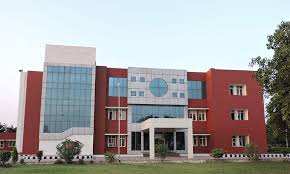
Introduction to Central Institute of Petrochemicals Engineering & Technology, Sonepat
CIPET Institute of Petrochemicals Technology [IPT] sits right in the industrial hub of Sonepat, Haryana. The institute started its journey back in 2006 to meet the growing demand for skilled engineers in the plastics and petrochemical sectors. It operates as an autonomous body under the Ministry of Chemicals and Fertilisers, Government of India. For its academic programs, the institute is officially affiliated with DCRUST University in Murthal and holds necessary approvals from the AICTE, making it a recognised name for technical education in the region.
Students considering this college will find it has a solid regional reputation, especially in polymer and plastics engineering. The placement cell does a great job connecting graduates with top manufacturing and chemical companies across North India. On top of that, the fee structure is highly subsidised since it is a government-backed institute. The B.Tech program costs around ₹55,660 per year, which is a massive relief for middle-class families looking for quality technical education without going into debt.
The campus runs a focused set of programs, primarily the four-year B.Tech in Plastic Technology, a three-year Diploma in Plastics Technology, and a few postgraduate diplomas. To get into these seats, applicants need to clear entrance exams like JEE Main or the state-level HSTES counselling. The institute also conducts its own CIPET JEE for specific lateral entry and diploma admissions, keeping the selection process transparent and strictly merit-based.
Key Facts About CIPET Sonepat
CIPET Sonepat is not your typical engineering college. Since it functions under the central ministry, the curriculum is heavily tilted toward practical skills rather than just textbook theory. The campus features specialised labs for polymer processing, mould design, and material testing. Students get to work with real industrial machinery, which gives them a significant advantage when they enter the job market.
The institute also maintains strong ties with local manufacturing units in the Sonepat and NCR industrial belts. This means students often get opportunities for live projects, industrial visits, and summer internships. The training and placement cell works year-round to bring recruiters to the campus. They organise soft-skills training and mock interviews to ensure students can confidently face corporate HR.
| Particulars | Details |
| Institute Name | CIPET Institute of Petrochemicals Technology (IPT) |
| Location | Murthal, Sonipat, Haryana |
| Established | 2006 |
| Institute Type | Government Institute |
| Affiliation | DCRUST, Murthal |
| Approval | AICTE |
| Governing Body | Ministry of Chemicals & Fertilizers, Government of India |
| Popular Courses | B.Tech, Diploma in Plastics Technology, Diploma in Plastics Mould Technology |
| Admission Process | JEE Main / HSTES / CIPET Admission Test |
| Hostel Facility | Available |
| Placement Support | Available |
| Campus Facilities | Labs, Library, Hostel, Workshops, Sports Facilities |
Courses Offered at CIPET Sonepat
The courses here are not just copied from a standard engineering syllabus. They are specifically built around the actual needs of the plastics and polymer manufacturing industry. When you study here, you are not just reading about chemical structures in a textbook; you are learning how to turn raw petrochemical granules into everyday products. The curriculum is updated regularly to include modern trends such as sustainable bioplastics, advanced 3D printing materials, and automated moulding techniques. This ensures that by the time you graduate, you already know how to handle the exact machinery and software that top companies use on their factory floors.
| Course Name | Duration | What You Will Study |
| B.Tech in Plastic Technology | 4 Years | Covers polymer science, mould design, plastics processing, and quality control. |
| B.Tech (Lateral Entry) | 3 Years | Same as the regular B.Tech, but designed for diploma holders to join directly in the second year. |
| Diploma in Plastics Technology | 3 Years | Focuses on the basics of plastic manufacturing, machine operation, and workshop practice. |
| PG Diploma in Plastics | 1–2 Years | Advanced courses for graduates looking to specialise in plastic mould design or material testing. |
Fee Structure and Payment Details
Since CIPET is backed by the central government, the biggest advantage here is that your education won't drain your family's savings. The fees are heavily subsidised compared to those at private engineering colleges, providing a massive relief for middle-class students. You can easily pay the tuition and hostel fees online through the official student portal using net banking, UPI, or debit cards. There are practically no hidden charges, though you will need to budget a little extra for your own lab coats, safety shoes, and final year project materials. If you face sudden financial trouble during the academic year, the administration is quite supportive and can help you set up a fee instalment plan or guide you toward easy education loans from nationalised banks.
| Course Name | Annual Tuition Fee | Other Charges (Exam/Lab) | Total Approx. Annual Fee |
| B.Tech in Plastic Technology | ₹50,000 | ₹5,660 | ₹55,660 |
| B.Tech (Lateral Entry) | ₹50,000 | ₹5,660 | ₹55,660 |
| Diploma in Plastics Technology | ₹30,000 | ₹5,850 | ₹35,850 |
| PG Diploma Programs | ₹35,000 | ₹7,450 | ₹42,450 |
How to Get Admission at CIPET Sonepat
Getting a seat here requires you to follow a specific sequence of steps. The process is mostly online, but you have to be physically present for counselling and document checks.
Step 1: Check Your Eligibility
Before doing anything else, make sure you meet the basic academic requirements. For B.Tech, you need a 10+2 pass with Physics, Chemistry, and Mathematics. If you are applying for the lateral entry seat, you must have a relevant polytechnic diploma.
Step 2: Register for Entrance Exams
You need a valid score on an accepted entrance test. Most students appear for JEE Main and then register for HSTES (Haryana State Technical Education Society) counselling. Alternatively, you can apply directly through the HSTES counselling (JEE Main-based).
Step 3: Participate in Counselling
Once your results are out, you must register for the counselling process. During counselling, you will fill in your college and branch preferences. Make sure you put CIPET Sonepat high on your list if this is your target institute.
Step 4: Seat Allotment and Reporting
After the counselling rounds, the authorities will release a merit list and allot seats based on your rank and choices. If you get a seat at CIPET Sonepat, you will receive an allotment letter. You then have to report to the campus within the given deadline.
Step 5: Document Verification and Fee Payment
Carry all your original documents, including 10th and 12th mark sheets, entrance exam scorecards, category certificates, and passport-size photos. The admission committee will verify everything. Once cleared, you pay the first-year tuition and hostel fees to lock in your seat.
Ranking and Placement Records
When it comes to getting a job after graduation, CIPET Sonepat has a distinct edge because it offers a highly specialised degree. Unlike thousands of mechanical or computer science graduates fighting for the same generic roles, plastic technology students are stepping into a niche market with a massive shortage of trained engineers. The packaging, automotive, and FMCG sectors are constantly expanding, and they desperately need people who actually understand polymer processing and mould design. The training and placement cell works overtime to bring these specific manufacturing companies to the campus.
| Parameter | Details and Statistics |
| Regional Standing | Highly preferred government institute for plastics engineering in North India. |
| Placement Percentage | Around 80% to 85% of eligible students get placed every year. |
| Highest Salary Package | ₹6.0 Lakhs to ₹8.0 Lakhs per annum (offered by top MNCs). |
| Average Salary Package | ₹3.5 Lakhs to ₹4.5 Lakhs per annum. |
| Top Recruiting Companies | Supreme Industries, Time Technoplast, Nilkamal, Mold-Tek Packaging, and various auto-part manufacturers. |
Cutoff Requirements for Admission
Cutoff ranks change annually based on HSTES counselling but generally remain accessible to state candidates.
| Course Name | Expected HSTES Cutoff Rank (General) | Minimum 10+2 Percentage |
| B.Tech in Plastic Technology | 5,46,000 to 14,12,000 (Based on 2025 data) | 45% in PCM |
| B.Tech (Lateral Entry) | Varies based on the diploma merit list | 45% in Diploma |
| Diploma in Plastics Technology | Merit-based on 10th marks | 35% to 40% in 10th |
Scholarships and Financial Aid at Central Institute of Petrochemicals Engineering & Technology
Since CIPET is a central government institute, students have access to a wide range of national and state scholarship schemes. The college administration actively helps students fill out these forms so they do not miss out on free money. If you belong to a reserved category or your family income is on the lower side, you can easily get your tuition fees fully reimbursed. Merit scholarships are also given to students who top their semesters.
| Scholarship Name | Who Can Apply | What You Get |
| Post Matric Scholarship | SC/ST/OBC students with family income below ₹2.5 Lakhs. | Full tuition fee reimbursement and maintenance allowance. |
| Haryana State Scholarship | Domicile students of Haryana are facing financial issues. | Financial aid as per state government norms. |
| Central Sector Scheme | Students who scored above the 80th percentile in Class 12. | ₹10,000 to ₹20,000 per year for college and university students. |
| Institute Merit Award | Top rankers in each semester at CIPET Sonepat. | Cash prizes and medals to encourage academic excellence. |
Eligibility Criteria for CIPET IPT Sonepat
Here is exactly what you need to qualify for the different programs at CIPET Sonepat. Read these carefully before applying to avoid any rejections later.
For B.Tech in Plastic Technology (Regular):
- You must have passed the 10+2 examination from a recognised board, such as CBSE, Haryana Board, or an equivalent.
- Physics, Chemistry, and Mathematics (PCM) are mandatory subjects.
- You need a minimum of 45% aggregate marks in PCM for the general category. Reserved category students get a 5% relaxation, meaning 40% is enough.
- A valid JEE Main score is required for admission through HSTES counselling.
For B.Tech (Lateral Entry):
- Candidates must hold a three-year diploma in Plastic Technology, Polymer Science, or a related mechanical/chemical branch.
- You should have at least 45% marks in your diploma final year.
- Admission is granted based on the HSTES lateral entry merit list.
For Diploma in Plastics Technology:
- Applicants must have passed the 10th standard from a recognised educational board.
- Science and Mathematics should be among the subjects studied in the 10th grade.
- A minimum of 35% marks is required for general category students.
- Admissions are usually based on the merit list of the qualifying exam or a state-level polytechnic entrance test.
Medical Fitness:
- All selected candidates must produce a medical fitness certificate from a registered doctor.
- The certificate must confirm that the student is physically fit to handle the practical lab work and machinery involved in plastics engineering.
Hostel Facilities and Campus Life at Central Institute of Petrochemicals Engineering & Technology
Living on campus makes the college experience much smoother, and CIPET Sonepat offers decent hostel facilities for those who need them. Since the college is located in an industrial area, having a hostel nearby saves a lot of travel time and helps students focus on their studies and lab work.
Room Allocation and Types
The hostel has separate blocks for boys and girls. Rooms are mostly double-sharing or triple-sharing, which helps students bond and learn to adjust to others. Single rooms are very limited and usually given to final-year students or those with specific medical needs. Each room comes with a bed, a study table, and a wardrobe.
Mess and Food Quality
The campus mess serves a standard North Indian menu. You get roti, rice, dal, seasonal vegetables, and occasionally paneer or egg dishes. The food is generally hygienic and filling, though students often say it can get a bit repetitive after a few months. There is a fixed timetable for breakfast, lunch, evening snacks, and dinner. Special menus are prepared during festivals like Holi or Diwali to give students a taste of home.
Security and Discipline
Safety is taken very seriously on the campus. The hostel premises are fenced and guarded by security personnel 24/7. There are CCTV cameras installed at all entry and exit points. The girls' hostel has a female warden and strict entry rules. Visitors are not allowed in the rooms; they may meet students only in the designated common area during specific visiting hours. A strict curfew is followed, and all students must be back inside the hostel gates by 8:00 PM.
Common Areas and Internet
To help students unwind, the hostel has a common room equipped with a television, carrom boards, and table tennis. There is also a reading room where you can study late at night without disturbing your roommates. Wi-Fi connectivity is available in the common study areas, though speeds may fluctuate during peak evening hours. Students are expected to maintain silence in the corridors during designated study hours.
Frequently Asked Questions Central Institute of Petrochemicals Engineering & Technology
1. What makes CIPET Sonepat different from other regular engineering colleges in Haryana?
CIPET Sonepat is a specialised government institute that focuses entirely on plastics, petrochemicals, and polymer engineering. Unlike regular colleges that offer generic branches like mechanical or computer science, the curriculum here is tailored to the manufacturing and chemical industries.
2. What are the placement opportunities for B.Tech Plastic Technology graduates?
The placement scenario is quite good because the plastics and polymer industry has a constant demand for skilled engineers. Companies like Supreme Industries, Nilkamal, and various automotive plastic part manufacturers regularly visit the campus. The average package usually hovers around ₹3.5 to ₹4.5 Lakhs per year.
3. Is it mandatory to stay in the hostel if I am from outside Sonepat?
No, staying in the hostel is not strictly mandatory, but it is highly recommended for outstation students. The campus is located in an industrial belt, and finding good, safe, private paying-guest accommodations nearby can be a bit tricky and expensive.
4. Can I get admission directly in the second year of B.Tech?
Yes, you can get direct admission to the second year of the B.Tech program through the lateral entry scheme. To be eligible, you must have completed a three-year diploma in Plastic Technology or a closely related branch like polymer science or chemical engineering.
5. What kind of lab facilities are available for plastics engineering students?
The institute has excellent, industry-grade lab facilities. You will find specialised labs for polymer processing, injection moulding, extrusion, and blow moulding. There are also computer labs equipped with the latest CAD/CAM software for plastic mould design.