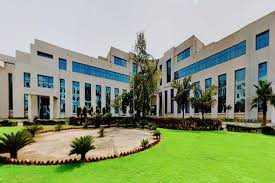
School of Agriculture and Applied Science Overview
The School of Agriculture and Applied Science (SAAS) at Monad University, Hapur (Uttar Pradesh) is committed to equipping students with knowledge and skills in agricultural sciences and applied disciplines. Established as part of the University’s mission to integrate scientific inquiry, agriculture and technology in a practice-oriented setting, the School emphasises interdisciplinary education across fields such as agriculture, life sciences, mathematics and chemistry. With modern laboratories, field-based training, and a focus on community and industry linkages in the Delhi-NCR region, the School prepares graduates for careers in agri-business, research, environmental sciences and allied areas.
School of Agriculture and Applied Science Highlights
The School of Agriculture and Applied Sciences offers quality education in agriculture and core science disciplines with a strong focus on practical training, laboratory work, and research-based learning. The institute provides modern infrastructure, experienced faculty, field exposure, and placement assistance to prepare students for careers in agriculture, research, government services, and private industries. Its rural–urban connected campus helps students gain real-time agricultural experience along with academic excellence.
| Particulars | Details |
| School Name | School of Agriculture and Applied Sciences |
| University | Monad University |
| Location | Hapur, Uttar Pradesh |
| Establishment | 2010 (under Monad University) |
| University Type | Private University |
| Recognition | UGC Recognized |
| Courses Offered | B.Sc Agriculture, M.Sc Agriculture, Ph.D Agriculture, B.Sc/M.Sc Science Programs |
| Departments | Agriculture, Physics, Chemistry, Mathematics, Life Sciences, Biotechnology, Home Science |
| Admission Mode | Merit/University norms |
| Facilities | Labs, Library, Smart Classrooms, Seminar Halls, Hostels, Sports, Cafeteria |
| Practical Training | Fieldwork, Agricultural Clinics, Research Projects |
| Placement Support | Training & Placement Cell, Career Guidance |
| Campus Type | Residential Campus |
School of Agriculture and Applied Science Course and Fees
The Courses and Fees structure at the School of Agriculture and Applied Sciences, a constituent school of Monad University located in Hapur, is designed to make quality education in agriculture and applied sciences affordable and accessible. The school offers undergraduate, postgraduate, and doctoral programs such as B.Sc. Agriculture, B.Sc. (General & Honours) in science streams, M.Sc. Agriculture, M.Sc. in various science disciplines, M.Tech, M.Phil, and Ph.D. courses. The total tuition fees are comparatively economical, with B.Sc. Agriculture costing around ₹42,000 for four years, B.Sc. programs approximately ₹34,000–₹35,000 for three years, and M.Sc. courses ranging between ₹21,000 and ₹58,000 depending on specialization. Professional and research programs like M.Tech and M.Phil have slightly higher fee structures, while Ph.D. fees vary by department. Overall, the institute maintains a budget-friendly fee policy along with laboratory training, fieldwork exposure, and modern academic facilities, ensuring good value for students pursuing careers in agriculture and scientific research.
| Course | Duration | Approx. Total Fees (INR) | Eligibility |
| B.Sc Agriculture | 4 yrs | ~₹42,000 | 10+2 (Science) |
| B.Sc (General & Hons.) | 3 yrs | ~₹34,550 | 10+2 |
| M.Sc (Science) | 2 yrs | ₹21,000 – ₹58,000 | Graduate degree |
| M.Sc Agriculture | 2 yrs | ~₹21,000 – ₹58,000 | B.Sc or equivalent |
| M.Phil | 1–2 yrs | ₹24,500 – ₹55,450 | Postgraduate degree |
| M.Tech | 2 yrs | ~₹1,28,000 | Bachelor’s + GATE/qualifier |
| Ph.D (Agriculture / Science) | 3+ yrs | Varies / not fixed | Postgraduate degree |
School of Agriculture and Applied Science Admission
Admission into various undergraduate and postgraduate programmes (like B.Sc. Agriculture, B.Sc. (Hons), M.Sc., M.Tech, M.Phil., Ph.D.) is primarily merit-based, meaning selections are made on the basis of academic performance in qualifying exams such as Class 12 for UG and bachelor’s degree marks for PG courses. For most programmes there is no separate entrance test unless specified otherwise by the university.
To apply, candidates can fill the online application form available on the university’s official website and pay the application fee (around ₹7,500) either through online payment (RTGS/NEFT) or demand draft. Alternatively, you can collect and submit the offline admission form at the Central Admission Cell on campus.
Eligibility Criteria
- Undergraduate (e.g., B.Sc. Agriculture): Applicants must have passed 10+2 from a recognized board with relevant subjects (science/agriculture/PCB/PCM). Minimum marks criteria generally apply (often around 40–50% for general category).
- Postgraduate (e.g., M.Sc): A bachelor’s degree in the relevant field with required minimum marks.
- M.Tech: Graduation in relevant discipline; selection may also consider GATE or university norms.
- Ph.D.: Master’s degree in the relevant discipline; selection typically on merit and/or university entrance criteria.
Application Steps
- Register / Fill Online Form: Visit the university admission portal, register and complete the form.
- Upload Documents: Submit academic certificates, identity proof, and passport-size photos.
- Pay Fee: Pay the application fee online or via demand draft.
- Merit Review: The university reviews applications based on eligibility and marks.
- Final Admission: Selected candidates receive admission confirmation and further instructions.
School of Agriculture and Applied Science Placement
The School of Agriculture and Applied Sciences provides dedicated placement assistance through the university’s Training & Placement Cell, which focuses on improving students’ employability through career counselling, soft-skills training, resume building sessions, internships, and campus recruitment drives. Students from agriculture and science streams get opportunities in agri-business companies, research labs, food processing units, seed and fertilizer industries, NGOs, and government departments. The university also encourages field training, industrial visits, and practical exposure to enhance real-world knowledge. Many graduates pursue careers in agriculture consultancy, agritech firms, laboratories, education, and higher studies, while some prepare for competitive exams and government jobs.
| Particulars | Details |
| Placement Cell | Training & Placement Cell available |
| Placement Support | Career guidance, resume building, mock interviews |
| Internship Opportunities | Yes (fieldwork, industry training, research projects) |
| Recruiting Sectors | Agri-business, Food Processing, Research Labs, Fertilizer & Seed Companies, Education |
| Job Roles Offered | Agriculture Officer, Lab Technician, Research Assistant, Field Executive, Quality Analyst |
| Higher Study Support | M.Sc., Ph.D., Competitive Exams guidance |
| Skill Development | Soft skills, personality development, workshops |
| Campus Activities | Industrial visits, seminars, expert talks |
School of Agriculture and Applied Science FAQs
1. What courses are offered by the School of Agriculture and Applied Sciences?
The school offers B.Sc. Agriculture, B.Sc. (General & Honours) in science streams, M.Sc. Agriculture, M.Sc. in various science subjects, M.Tech, M.Phil., and Ph.D. programs.
2. What is the eligibility for B.Sc. Agriculture admission?
Candidates must have passed 10+2 with Science subjects (PCB/PCM/Agriculture) from a recognized board with the required minimum marks.
3. Is admission entrance-based or merit-based?
Admissions are generally merit-based, depending on marks obtained in the qualifying examination. Some courses may follow university norms or additional screening.
4. What is the duration of the B.Sc. Agriculture course?
The B.Sc. Agriculture program is a 4-year full-time undergraduate degree.
5. Are hostel facilities available?
Yes, separate hostel facilities for boys and girls are available within the university campus.
6. Does the school provide placement assistance?
Yes, the Training & Placement Cell provides internships, career guidance, and campus recruitment support for students.
7. What career options are available after completing agriculture courses?
Students can work in agri-business companies, research labs, government departments, food processing industries, or pursue higher studies like M.Sc. and Ph.D.
8. Are practical training and fieldwork included in the curriculum?
Yes, the curriculum includes field visits, laboratory work, research projects, and hands-on agricultural training.